
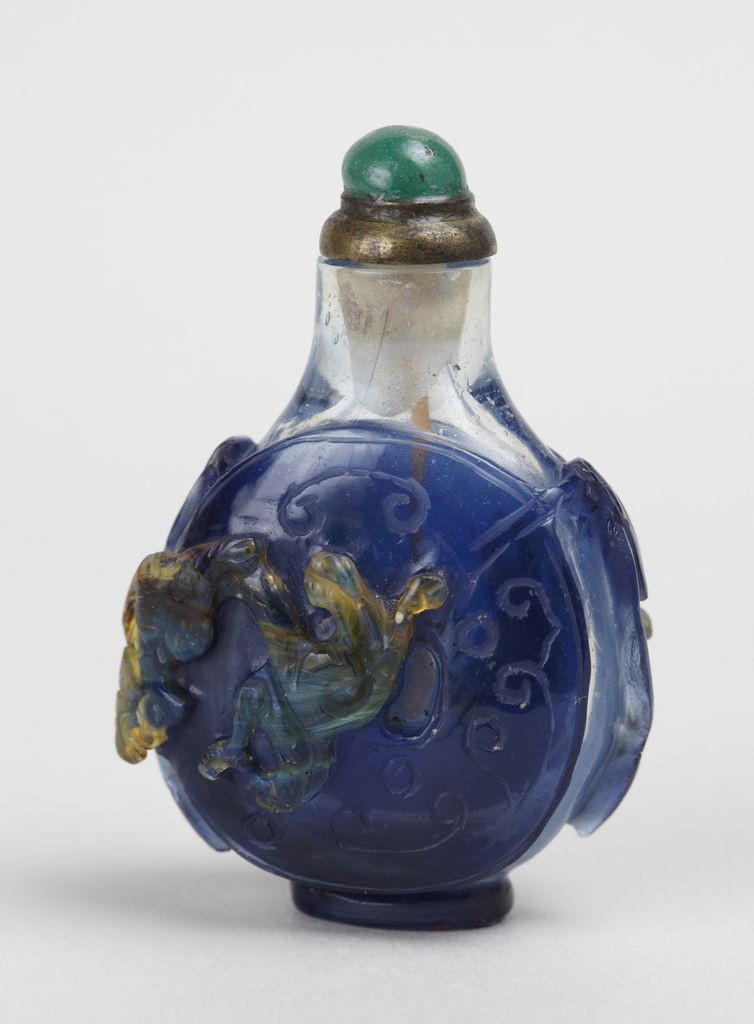
In the Corning Museum of Glass’s ongoing Asian Glass display, Chinese ceremonial carvings share a case with Japanese vessels and Indonesian beadwork. Next spring, the museum in Corning, New York, plans to give Chinese glass a show of its own. In its November 10 announcement, the museum said *Ablaze: 500 Years of Chinese Glass* would bring together nearly 180 objects from its collection and outside lenders from May 8 through October 17, 2027.
The difference is more than a matter of space. The current display’s account of Chinese cameo glass starts with the imperial workshops that the Kangxi emperor established in Beijing in 1696 under Jesuit supervision. The new exhibition’s account reaches back before those workshops. It points to finds from tombs of the Yuan dynasty and from Boshan, in Shandong province, as evidence of a glass industry that was already established when European specialists arrived. The court workshops become one chapter in a longer history of Chinese glassmaking.
The museum’s gallery guide explains how makers carved through layers of different-colored glass to produce a design. The exhibition announcement connects that approach to an older craft: Chinese jade carvers had long used cameo carving, and glassmakers adapted it to a different material. Look for the contrast between the layers and the depth of the cut. That is where the maker’s decisions are easiest to see.
The museum says the show will range from hairpins to a glass-inlaid automaton clock and use enlarged reproductions of prints and paintings to show glass in the settings where people used it. That gives visitors two ways to look at a piece: first at what the glassmaker did with the material, then at what somebody wanted the object to do.
The museum’s visitor guide says admission is free for visitors 17 and under and that museum tickets are valid for two consecutive days. Check the guide before making spring travel plans for current prices and hours.